
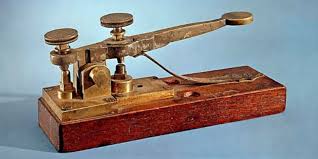
Morse code was created in the mid 1830s by Samuel Morse. Morse, Joseph Henry, and Alfred Vail needed a new way of getting messages across when they invented the electrical telegraph system. This was the first system that allowed communication over great distances, but it could only communicate pulses of electricity to another machine. Morse’s telegraph succeeded while others failed because it relied on dots and dashes that were practical and not too difficult to understand. The telegraph allowed people to send instant messages across long distances. Before Morse was born, telegraphs were in experimental stages. In 1753, Charles Marshall suggested using one wire for each letter of the alphabet. The message could be transmitted by connecting those wire terminals in turn to an electrostatic machine and observing the deflection of pitch balls at the end. However, this was considered impractical and never developed as a fully functioning system because it made a huge leap as a conception that more technology could handle. From a psychology perspective, Morse’s telegraph was easier for people to grasp and learn, while Charles Marshal’s telegraph had a bigger toll on operators working with the many wires, as well as the technological downsides.